
 Română
 Русский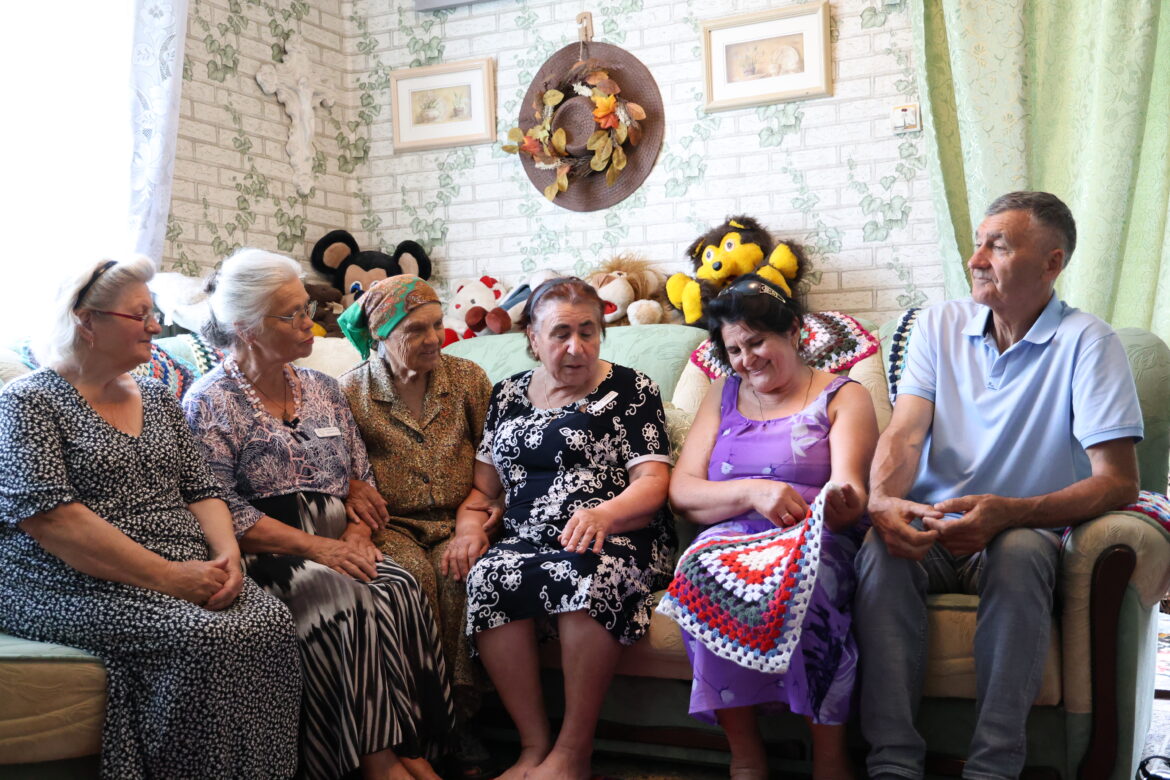
HEALTH AMBASSADORS: A COMMUNITY MODEL FOR PROMOTING AN ACTIVE AND HEALTHY LIFESTYLE AMONG THE ELDERLY
| 23.10.2025The ageing of the population represents one of the most critical demographic and social challenges of the 21st century, bearing significant implications for healthcare systems, social services, and the overall quality of community life. In the Republic of Moldova, just as in many other European states, the number of elderly people is steadily increasing. This rise brings a corresponding surge in needs related to care, emotional support, and access to relevant health information. In this context, traditional approaches that focus exclusively on intervention by medical specialists often prove insufficient. There is a clear requirement for complementary, sustainable solutions that are grounded in people’s reality, placing a crucial emphasis on prevention, health education, and community involvement.
It is within this framework that the “Health Ambassadors” act as a vital link between medical knowledge and the community’s genuine needs, effectively transforming theoretical advice into practical, easily understood, and actionable recommendations. They are neither medical professionals nor specialists, but simply ordinary citizens—active community members—who dedicate their time and energy to helping others live healthier, more consciously, and better lives. Through their personal conduct, practical advice, and consistent support, the ambassadors successfully convey health messages to everyone in a simple, clear, and approachable manner.
The “Health Ambassadors” initiative is integral to the project “Improving the Health and Well-being of the Elderly, Chronically Ill, and Persons with Disabilities,” which the NGO “CASMED” is implementing between 2024 and 2026. The project covers the north of the Republic of Moldova and several central districts, aiming to boost vulnerable individuals’ access to health services and enhance their overall well-being. In this capacity, the ambassadors are performing an essential function: they are the voice of the community and provide direct support to those most in need of information, guidance, and encouragement. These models clearly demonstrate that when information is delivered in simple, direct language and the advice comes from trusted community figures, the resultant impact on behaviour and health status is substantially greater.
Health Ambassadors are dedicated volunteers who have embraced the mission of promoting healthy lifestyles and encouraging disease prevention within their communities. They relay crucial health information in accessible language, offer practical advice tailored to people’s age and specific needs, and actively contribute to community education on matters such as medical check-ups, proper nutrition, physical activity, and emotional balance. Their role is built upon three principal pillars: first, information, where they explain essential health concepts simply and provide guidance that is easy to integrate into daily life; second, inspiration, where they serve as personal examples, illustrating that positive change is achievable at any age; and third, support, where they offer a receptive ear, encouragement, and guidance, assisting community members in overcoming fear, mistrust, or a lack of information.
As part of the project, 20 members of intergenerational groups are undergoing training to become effective Health Ambassadors. During these training sessions, they learn critical skills such as active and empathetic listening, effective communication with older persons, how to give prevention advice, and how to address sensitive subjects like depression, anxiety, and loneliness. They also receive detailed information on healthy living, balanced diets, physical activity, the importance of regular check-ups, and strategies for supporting the mental health of those around them.
Following their instruction, the ambassadors organise community-based education activities—workshops, discussions, and information sessions—and become a consistent source of support for seniors and their families. Simultaneously, the CASMED team (comprising nurses, social workers, and community facilitators) collaborates with local medical providers and mental health centres to ensure specialised support is available when required. The adopted “cascade” model ensures that the information does not merely stop with the 20 trained ambassadors; it extends further to at least 120 members of the intergenerational groups, who then become health promoters in their own communities. This approach generates a continuously expanding impact, enabling health messages to reach a considerable number of people.
The ambassadors’ work is not limited to giving information. They also conduct home visits for isolated or less mobile elderly individuals, providing practical assistance, companionship, and emotional support. These meetings mitigate social isolation, bolster the sense of belonging, and can prevent or alleviate mental health difficulties. Moreover, the ambassadors function as a critical link between the community and social or medical services, raising awareness of the specific needs and difficulties that people face. Their work adheres to a clear ethical code: they only transmit accurate and verified information, treat all individuals with respect and non-discrimination, maintain confidentiality, and serve as role models for healthy behaviour. Furthermore, they collaborate with other volunteers and specialists and commit to continuous learning to consistently improve their service.
Elena D., a Health Ambassador from Sofia village, Drochia district, shares that her role fundamentally shifted her community perspective: “At first, I thought all I could do was hand out leaflets and tell people to see a doctor. I then realised my mission was far deeper—to listen, to be there when someone needs a kind word, and to help them change their habits step by step. Now, people in the village come to me with questions themselves, and that is my greatest reward.”
For Valentina S., an Ambassador from Obreja Nouă village, Fălești district, this has become more than just a volunteer activity: “I began participating out of curiosity, but now I feel I am doing something genuinely important. It brings me joy when people I’ve advised on diet or exercise tell me they feel better, that they are no longer ignoring the signs of illness, and that they are going for regular check-ups.”
The project’s beneficiaries likewise confirm the positive results. Elena M., 72, from Corpaci village, Edineț district, recounts: “Often, I wouldn’t go to the doctor because I didn’t know how important it was, or I was scared. After speaking with Ms Emilia Z., I began to understand what I needed to do for myself. Now I have regular check-ups, I exercise, and I have even changed my diet. I learned that my health largely depends on me.”
For Vasile T., 78, from Cajba village, Edineț district, the home visits have offered more than mere information: “I’ve been living alone for a few years and haven’t had much company. When Ms Tamara P. visits, we chat, she asks how I’m feeling, and she explains things about health.”
The “Health Ambassadors” initiative ultimately demonstrates that positive change begins with small, dedicated steps taken by people from within the community itself. Through their commitment, health information becomes more accessible, support is closer at hand, and trust is reinforced. They are successfully transforming knowledge into concrete action, leading to a more active, healthier, and more meaningful life for the elderly in the Republic of Moldova.