![casmed [logo] H color 1 (1)](https://casmed.md/wp-content/uploads/2025/06/casmed-logo-H-color-1-1.png)
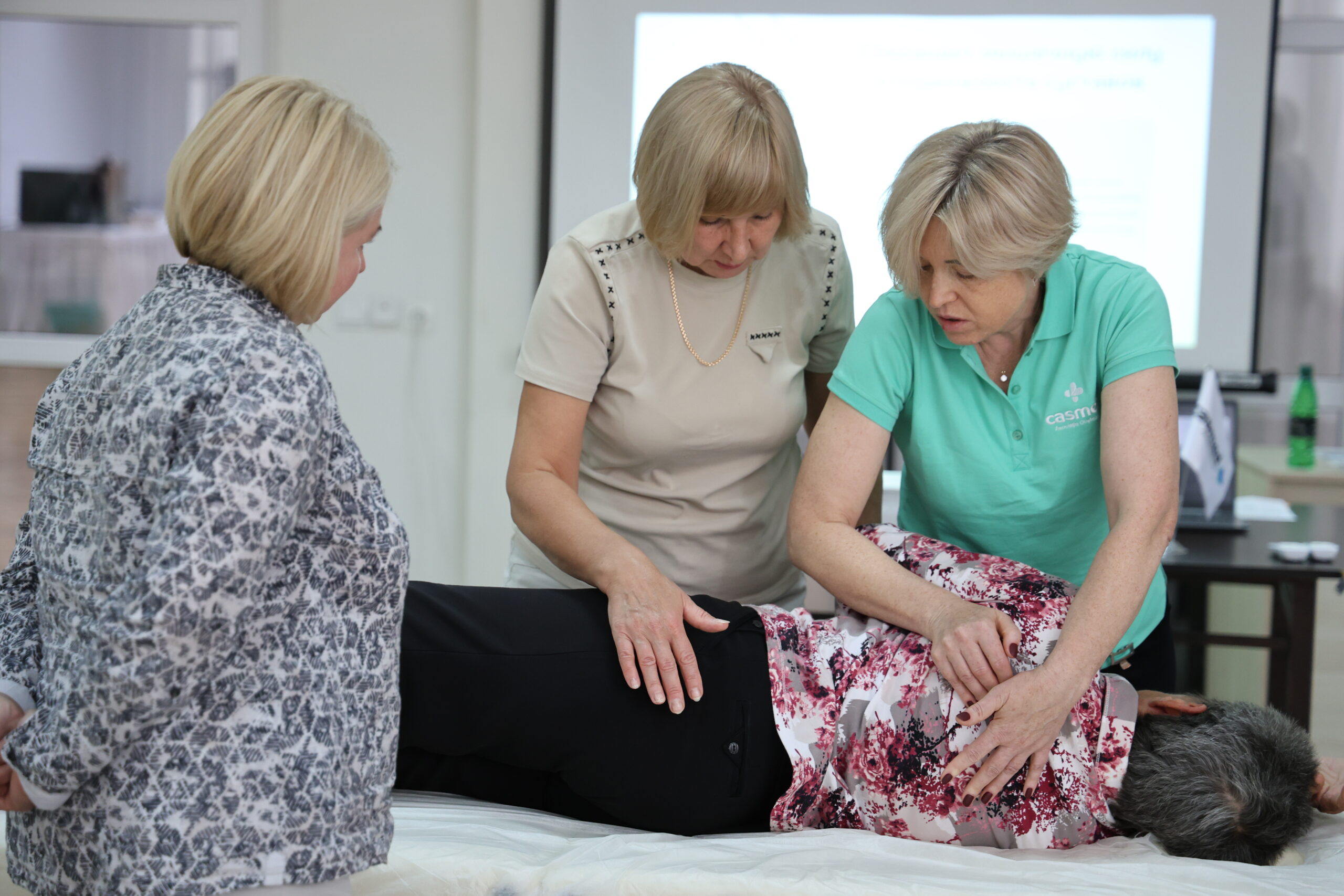
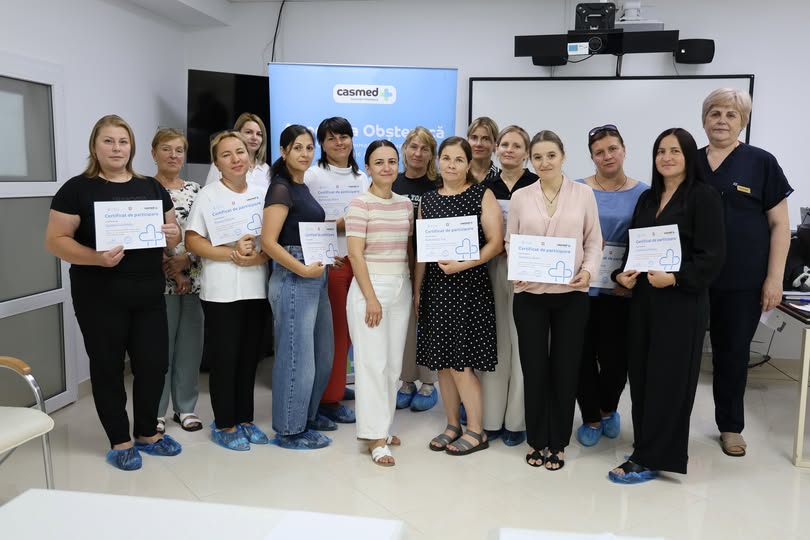
How do you help someone get out of bed without causing them pain? How do you turn them safely to provide personal care? How do you transfer them into a wheelchair while protecting your own back? These are situations faced by people caring for someone who depends on others for support, and experience or intuition alone is not always enough. For 49 people, a three-day course on caring for people who depend on others for support was an opportunity to learn – and, above all, to practise – how to provide this care correctly and safely.
The course brought together 22 refugees from Ukraine and 27 residents – people caring for family members, as well as personal assistants from ATAS Centru and ATAS Nord. Some already had experience of providing care, while others needed to learn correct and safe techniques. For refugees, these skills can not only help them support their loved ones, but may also open up opportunities for professional integration in the Republic of Moldova.
Olga Movchan, originally from Cherkasy, Ukraine, knows from personal experience what day-to-day care involves. Three members of her family need support.
„At home, I care for my mother, who is ill and bedridden, my father, and my mother-in-law, who has difficulty moving around”, she says.
That is why some of the most useful topics for Olga were „safe mobilisation and transfer techniques” and „the prevention of pressure sores”. These are practical skills she needs when helping someone change position, get up, or when caring for a person who spends long periods in bed.
These practical needs also shaped the course programme. In the first part, participants discussed the needs of people who depend on others for support, personal hygiene, skin care, the prevention of pressure sores, and ways to support a person’s independence. This was followed by communication, looking after their own wellbeing and resources, and, during the practical sessions, techniques for mobilisation, positioning and transfers.
For some participants, these skills were entirely new. For others, the course was an opportunity to find out whether the things they were already doing were also being done correctly.
Lidia Fadeeva, a refugee from Ukraine, says simply that before the course she relied heavily on her own experience.
„Before this, I did many things mostly by intuition. During the course, I realised that I wasn’t doing some things quite correctly. The knowledge I gained here will be useful to me both in everyday life and at work.”
For someone who already cares for another person, learning does not necessarily mean starting from scratch. Sometimes it means understanding why a particular movement should be performed in a certain way, how to avoid an incorrect position, or how to help someone without putting excessive strain on your own body.
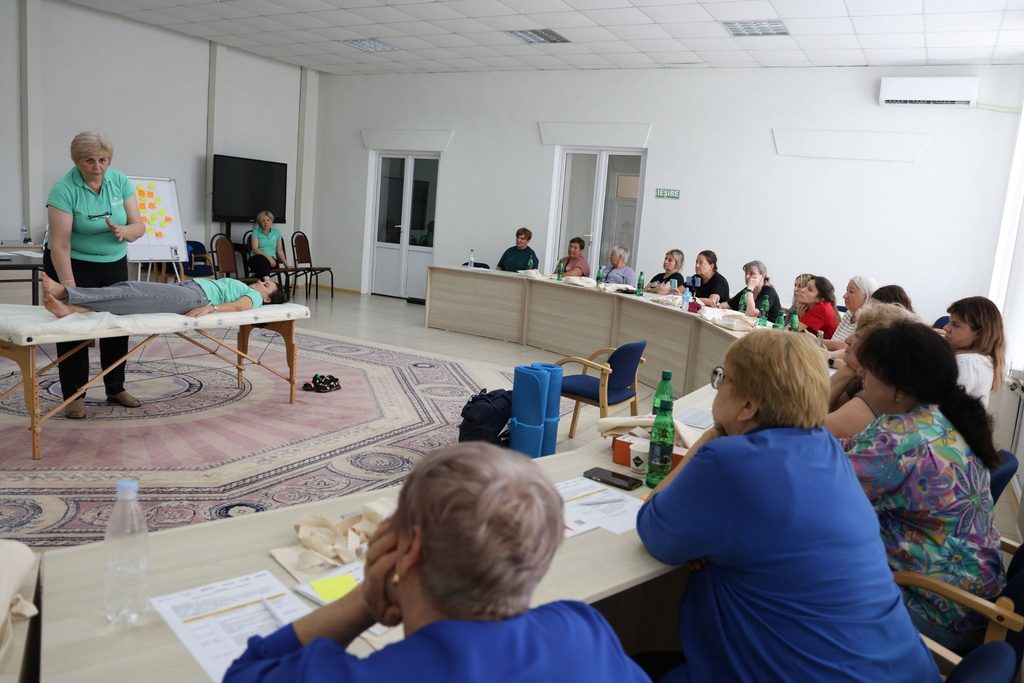
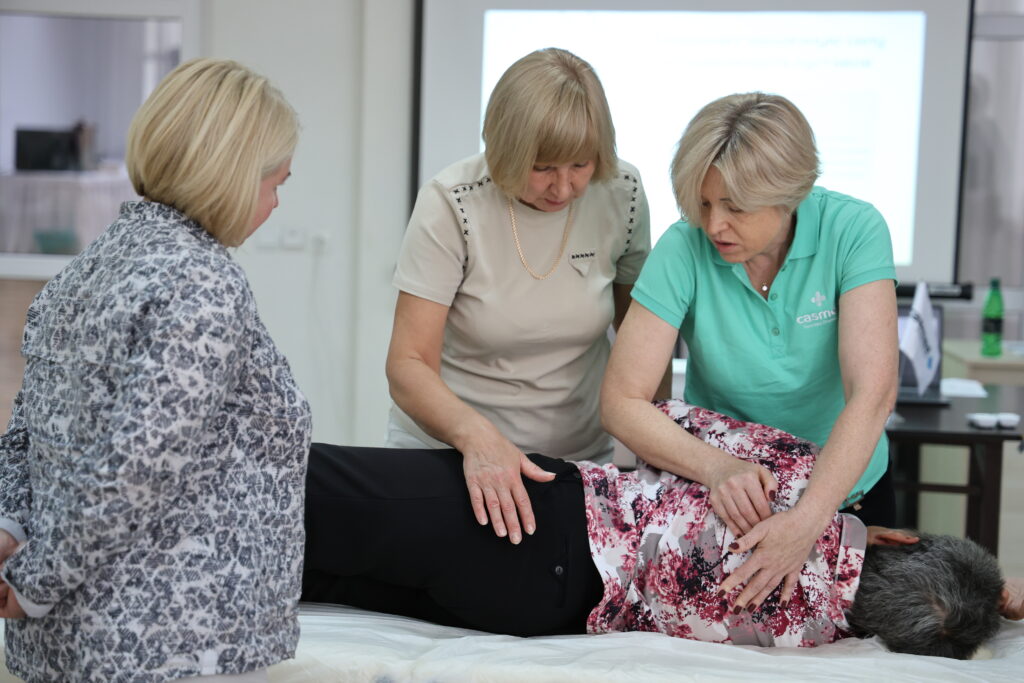
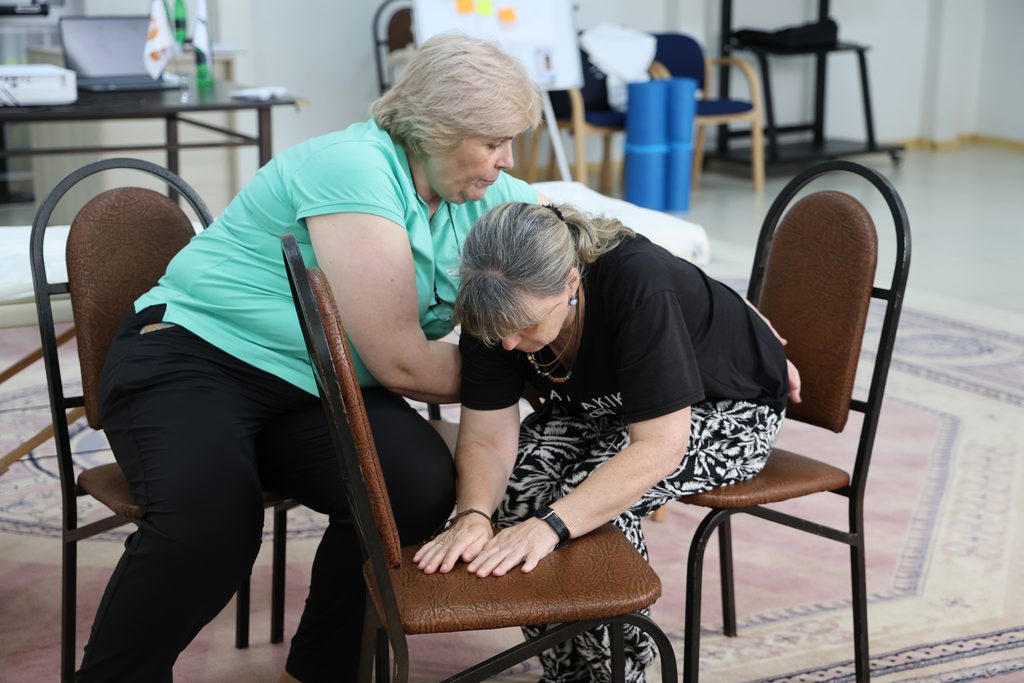
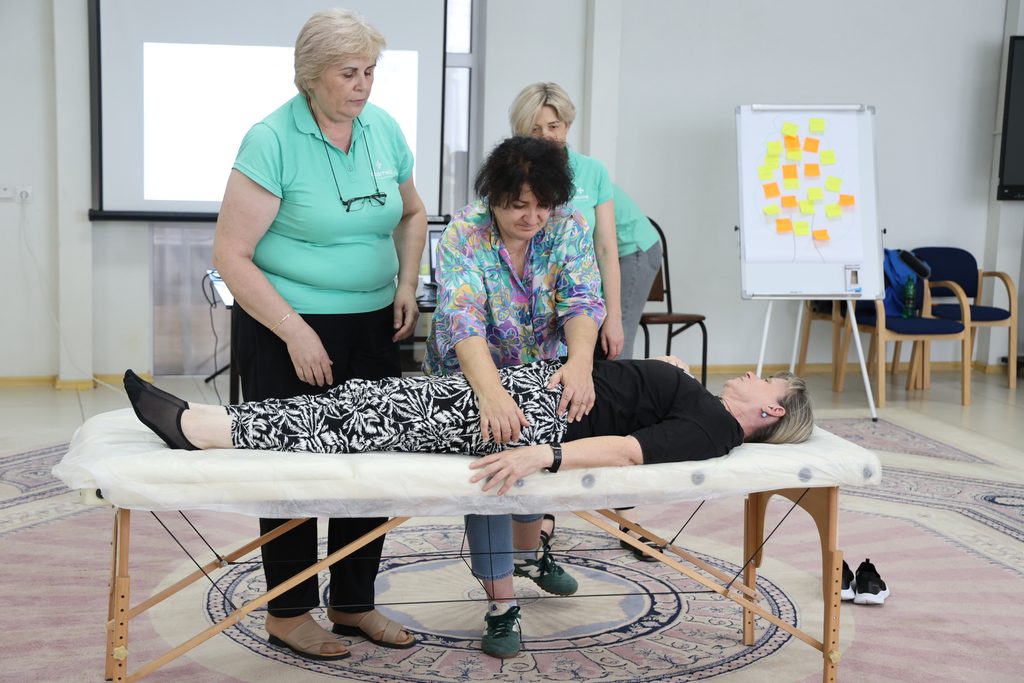
During the training, participants practised how to help someone get out of bed or rise from a chair, how to transfer a person between a bed and a wheelchair, and how to provide support while they are walking. They also worked on their own body positioning and on how movement can be used to reduce physical strain.
For Liubov Cozlan, originally from Ukraine, one of the things she particularly appreciated was that the explanations were followed by practical exercises.
„I wanted to learn something new that would be useful to me in the future. I liked that we had practical exercises, not just explanations.”
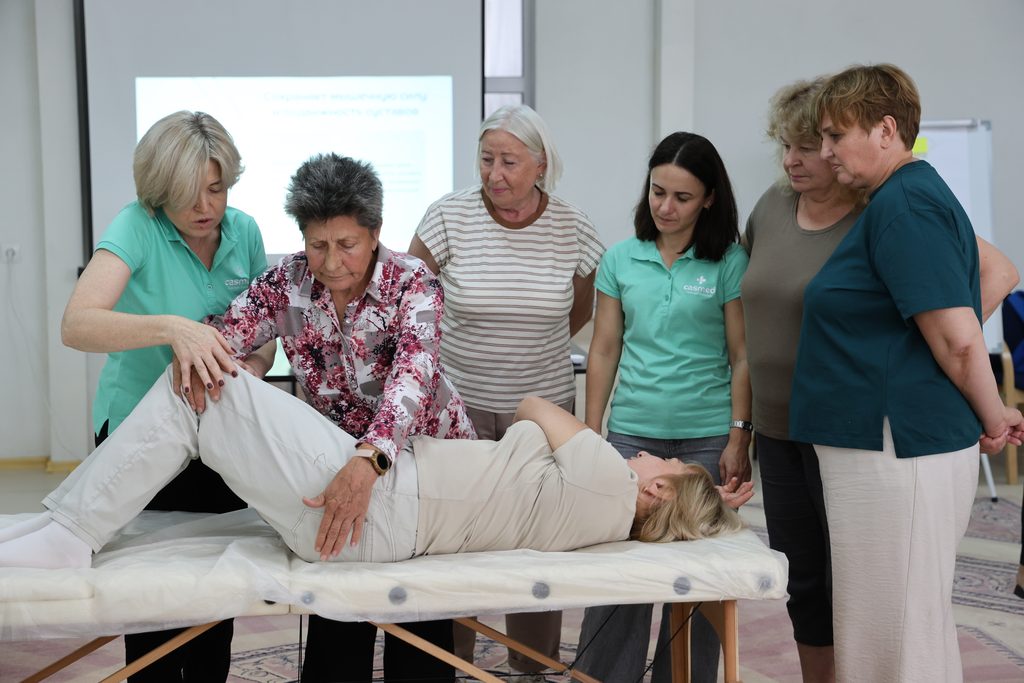
Some techniques were practised in turns, with participants switching roles. This allowed them to experience each technique both from the perspective of the person providing support and from that of the person receiving it.
Elena Cipricova, originally from Kyiv and now living in Chișinău, experienced both roles. For her, the desire to learn also has a personal motivation.
„I have a 96-year-old aunt whom I help. She can still walk, but her knees are not as strong as they used to be, so it is important for me to know what to do as her needs change.”
Elena is thinking ahead to a time when her aunt may need more support than she does now. That is why she paid close attention to the techniques involved in caring for someone who is bedridden.
„I saw how professionals correctly turn a person in bed to provide personal care. I also saw how you should communicate with someone who is unwell.”
Then she tried it herself.
„I was also a “model” during the exercises. Afterwards, we switched roles and I tried turning my colleagues.”
For a few minutes, Elena was the person receiving support. Then she changed roles and practised the technique herself. For her, the course is connected to the support her family may need in the future, but not only that.
„I think that, in the future, this could also become an additional profession for me.”
Oxana Vasilieva, another refugee from Ukraine, came to the course with a different background. She is a medical geneticist and, through her work, has frequently interacted with people with hereditary conditions and disabilities.
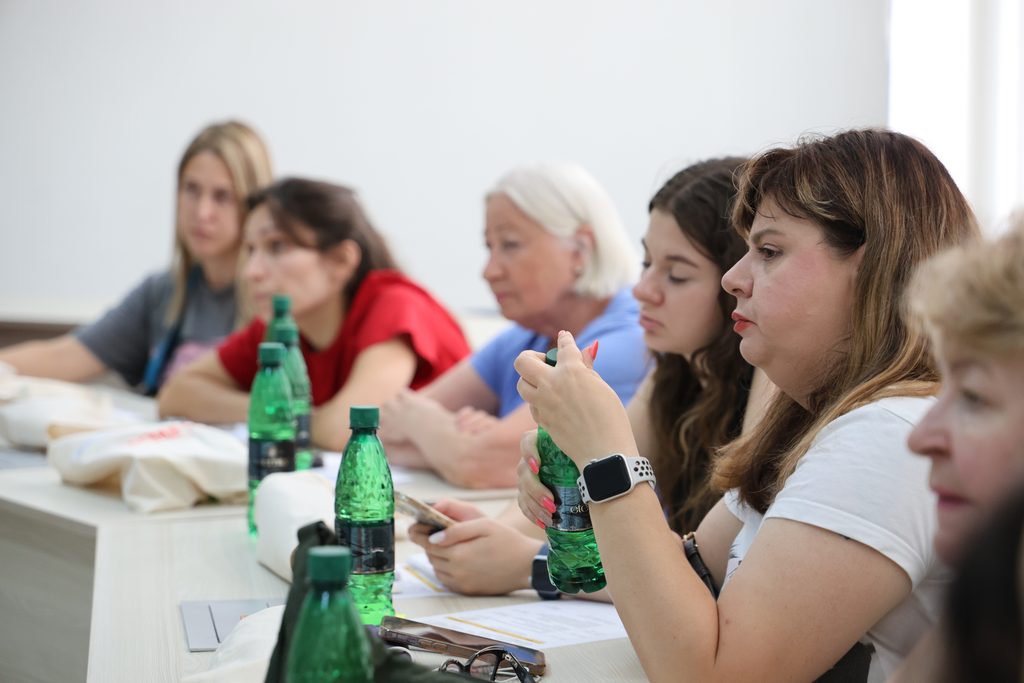
„I am a medical geneticist, and I have worked with people with disabilities. But there are practical skills that you do not learn at medical university. That is exactly what I was looking for in this course.”
Medical knowledge and day-to-day care do not always require the same skills. Knowing how to help someone get up, reposition them, or support them while walking takes practice. For this reason, the practical part of the course also covered principles of biomechanics and ergonomics, helping participants learn how to use their own body position and body weight without putting themselves under excessive physical strain.
But care is not only about movement, hygiene or transfers. The way you speak to the person you are supporting, how you listen to them and how you explain what you are about to do are equally important. „It is important to know how to communicate,” says Oxana.
For Ana Condratenco, a refugee from Ukraine, communication was one of the reasons she decided to take part.
„In my work, I interact with many people with disabilities. It is very important to know how to interact and communicate appropriately with people in vulnerable situations.”
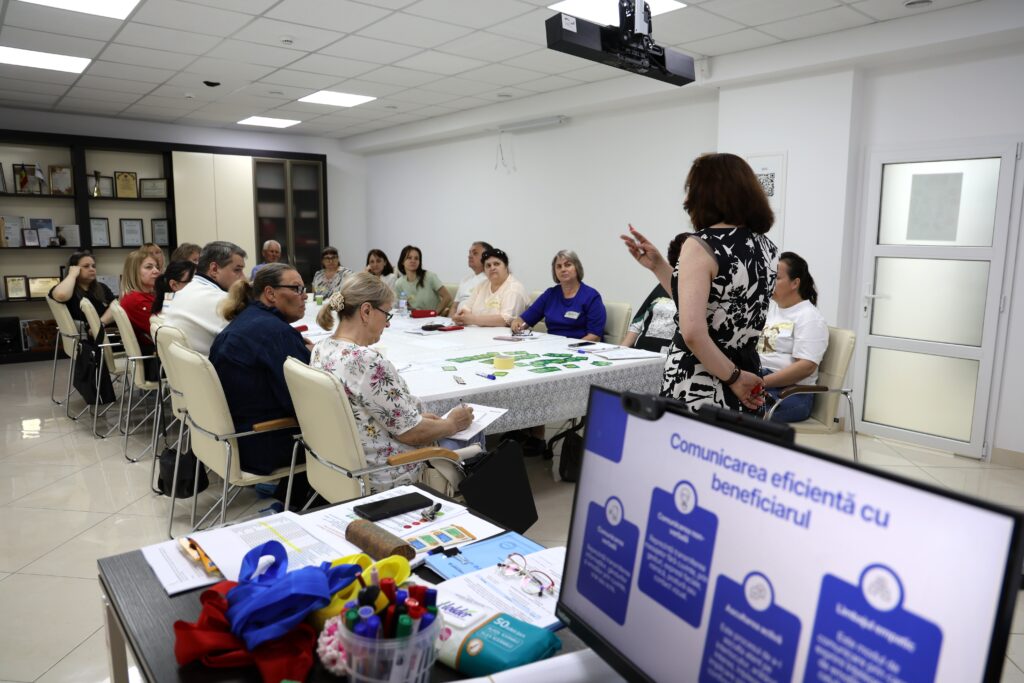
During the training, participants discussed verbal and non-verbal communication, active listening and empathetic language, as well as difficult situations that may arise in their relationship with the person receiving care or with their family.
Ana says she found both these discussions and the practical sessions useful.
„I learnt many useful things about caring for people with limited mobility, as well as about mobilisation and transfers. I also found the part about preserving our own energy and emotional balance very useful, so that we do not reach the point of exhaustion.”
This is an aspect of care that can easily be overlooked. When attention is focused every day on another person’s needs, carers may ignore their own signs of fatigue. During the course, participants discussed how to recognise exhaustion, manage stress and preserve their physical and emotional resources.
„For me, it was important that we also talked about ourselves – the people providing the support,” says Ana.
The experiences of these women are just a few among those of the 49 people who took part in the course. Some came with specific situations they face at home, others with experience gained through their work as personal assistants or in other fields, while others wanted to develop skills they could use in the future.
This intervention is supported through the UNFPA Humanitarian Thematic Fund and under the project ‘Building women’s resilience and excellence through inclusive and family-friendly employment opportunities’, implemented by UNFPA and UN Women with the support of the Austrian Development Agency (ADA).