![casmed [logo] H color 1 (1)](https://casmed.md/wp-content/uploads/2025/06/casmed-logo-H-color-1-1.png)
For many refugee children, fear does not stay behind once their family crosses the border. It can reappear later in small, everyday moments: restless sleep, fear of loud noises, the need to stay constantly close to their mother, or reactions that adults may not immediately understand.
This is the story of a five-year-old child from Ukraine who arrived in the Republic of Moldova with his family. From the first days of his life, he grew up in an environment marked by war, air raid alarms, explosions, and constant uncertainty. At an age when children need routine, calm, and a sense of protection, he lived in a state of almost permanent alert.
Leaving the area of danger was a lifesaving step for the family. But reaching a safer place does not erase fear overnight. The difficult experiences the child had lived through continued to shape his behavior and the way he related to people around him.
After arriving in Moldova, the family noticed strong episodes of anger and aggressive behavior. These appeared both within the family and in contact with other people. Most often, these reactions were directed toward his mother, the person to whom he had been most attached during the period of danger.
From the outside, such behavior can be difficult to understand. But behind it there was not “bad behavior” in the simple sense. There was fear. There was accumulated tension. There was a small child trying to express what he could not yet put into words.
His mother had also lived through a very difficult period. During the war, she had tried to protect her child every minute. This constant care was natural in a context of danger, but later made separation from the child very difficult. Both mother and child needed time to gradually learn that the place where they are now can be safe.
The family asked for support with a very concrete goal: to help the child prepare for kindergarten, interact with other children and adults, and stop responding with aggression when he felt frightened, frustrated, or overwhelmed.
A safe space, built step by step
Psychological support began in the winter of 2025. The sessions took place once a week, individually, at a pace adapted to the child’s age and emotional state.
When working with a young child affected by traumatic experiences, rushing does not help. The first step is not to ask the child to explain what he feels. Often, he does not yet have the words for that. The first step is to create a safe, predictable space where he feels he is not being judged and can express his emotions without fear.
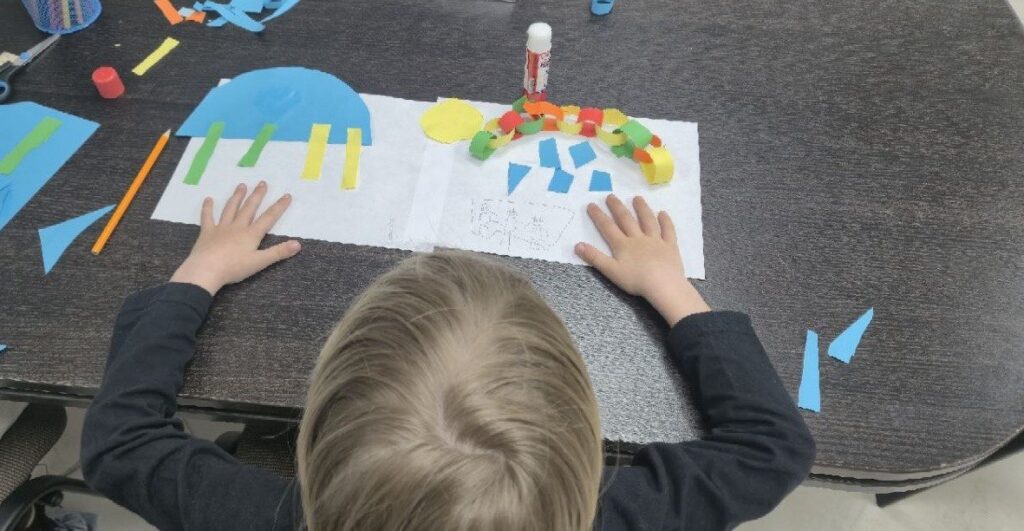
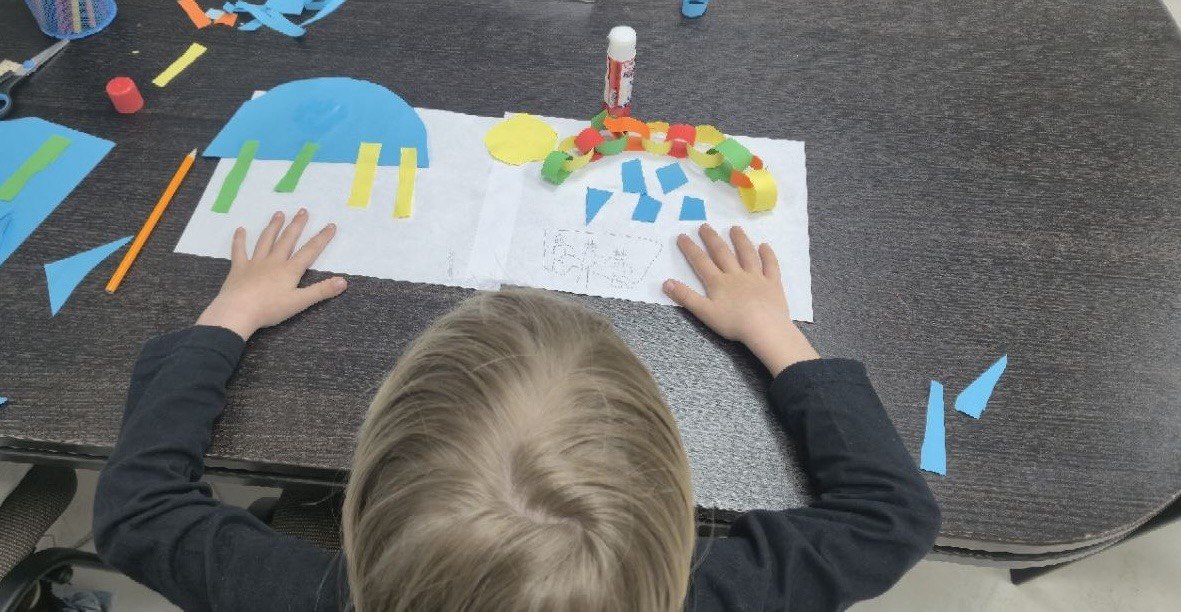
The psychologist used age-appropriate methods: play, drawing, coloring, and modeling with plasticine. To an adult, these may seem like simple activities. A child who has lived with fear for a long time can find ways to regain a sense of control, calm down, and express what cannot be said directly.
Working with plasticine helped the child use a soft, easy-to-shape material. Through this activity, he was able to release part of the tension stored in his body and safely experience the feeling that he could build, change, and control something around him.
Coloring brought structure and calm. Clear outlines and boundaries, along with the repetition of a predictable activity, helped the child concentrate better and gradually regulate his emotions.
Drawing provided a space for the child to express feelings, fears, and inner images that were difficult to put into words. For the psychologist, these expressions were also important in understanding the child’s emotional world and adapting the support to his needs.
Play as a path toward calm
Movement-based games became an important part of the intervention. Children who have lived for a long time in fear may continue to carry an inner state of alertness. The body can react as if danger is still nearby. Sometimes this tension appears as restlessness, outbursts, or physical reactions toward others.
Through dynamic play, the child learned to release this energy in a safe and guided way. Movement, simple rules, and structured activities helped him be active without hurting others. Gradually, energy that had previously turned into aggressive reactions began to be expressed through play, movement, and controlled interaction.
The changes did not happen overnight. But they started to show.
The child became better able to regulate his emotions and accept guidance from an adult. Episodes of aggression decreased, and the relationship with his mother became less tense. Impulsive reactions did not disappear immediately, but they became less frequent and easier to manage.
One important step was the boy’s improved participation in structured activities. He was able to stay focused on a task for longer, accept boundaries more easily, and gradually find other ways to express frustration, fear, or insecurity.
For a five-year-old child affected by early experiences of fear and instability, these changes are significant. They show that, in a safe and predictable environment, a child can gradually learn to express emotions without using physical reactions toward others.
Preparing for kindergarten
Psychological support is still ongoing. The current focus is on preparing the child to interact in small groups. This is an important step before gradually joining a larger setting, such as kindergarten.
The goal is for the boy to communicate more easily with other children and adults, gradually accept separation from his mother, and use calmer ways of expressing himself when he feels frightened, upset, or overwhelmed.
For children affected by war, a sense of safety is not rebuilt only by moving to a new place. It is rebuilt through stable relationships, patience, and support that is adapted to the child’s age.
A restless or aggressive child is not a “bad” child. Sometimes, it is a child who does not yet know how to say: “I was afraid.”
And when that fear is understood, the child can begin, step by step, to trust again.
This activity is part of the project “Improving access to essential protection services by strengthening the humanitarian response role of local women-led organizations from Ukraine and Moldova (WLO),” funded by the Federal Republic of Germany through the Federal Foreign Office, implemented by HIAS Europe in partnership with HIAS Moldova and CASMED Public Association.
Sandu Solcan, Psychologist, „CASMED” NGO